
Functional Fitness After 50: The 5 Physical Capabilities Your Training Needs
When you explore functional training, you quickly encounter the fundamental movement patterns: squatting, hinging, pushing, pulling, rotating, and walking. These movements form the foundation for almost everything you do in daily life.
But these movement patterns are only half the truth. Behind every movement are five physical capabilities that determine how safely, stably, and powerfully you move. A 2024 systematic review published in the European Review of Aging and Physical Activity shows: Functional training significantly improves daily activities – but only when it addresses all relevant fitness components.
The five pillars of functional fitness are:
Strength
Balance
Mobility
Coordination
Core Stability
Let's examine why each of these capabilities becomes especially important after 50 – and how you can train them effectively.
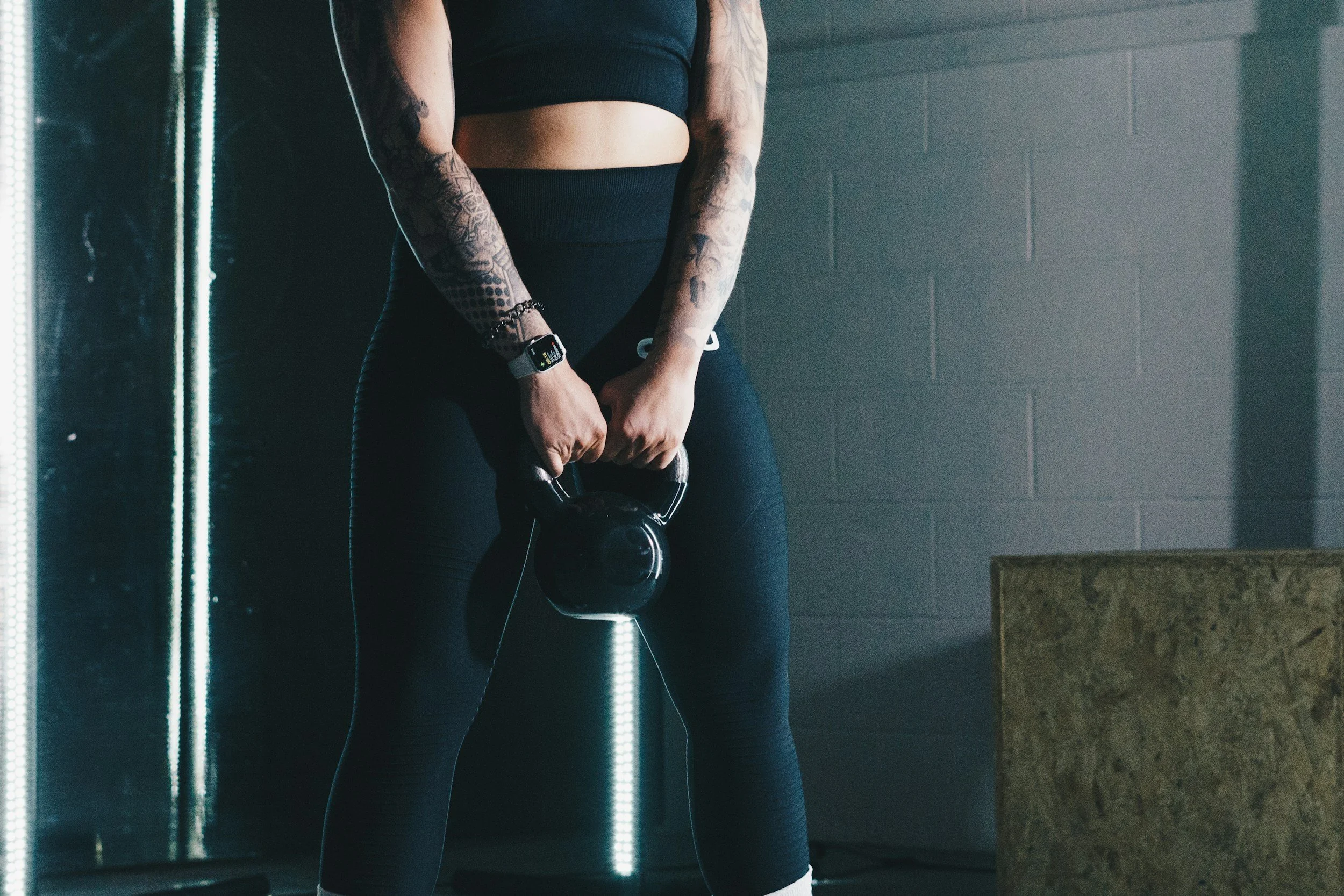
1. Strength: The Foundation of Your Independence
Why Strength After 50 Is Critical
With each decade after 30, you lose an average of 3-8% of muscle mass – a process known as sarcopenia. Without targeted strength training, this loss accelerates. A 2024 study in BMC Geriatrics shows: Leg strength is the strongest predictor of whether you can still live independently at 80+.
Strength enables you to:
Stand up from a chair without support
Carry shopping bags
Climb stairs
Get up from the floor
A Canadian longitudinal study with over 9,000 participants aged 60+ found: Those who regularly do strength training have 32% better mobility and a 26% higher sense of healthy aging – even if they're already physically active.
Test Your Strength
Chair Stand Test (30 seconds):
Sit on a stable chair (seat height approximately 45 cm)
Cross your arms over your chest
Stand up and sit down as many times as possible in 30 seconds
Count complete repetitions
Reference Values for Women:
50-54 years: 15-19 repetitions
55-59 years: 14-18 repetitions
60-64 years: 12-17 repetitions
65-69 years: 11-16 repetitions
70+ years: 10-15 repetitions
Reference Values for Men:
50-54 years: 16-21 repetitions
55-59 years: 15-20 repetitions
60-64 years: 14-19 repetitions
65-69 years: 12-18 repetitions
70+ years: 11-17 repetitions
Train Your Strength
For leg strength, squats, lunges, and hinge movements are particularly effective. Depending on your fitness level, you'll find variations in the Bodyweight Library from simple bodyweight squats to more challenging single-leg versions.
→ Squat exercises for all levels
→ Lunge variations
→ Hinge movements (hip hinge)
For upper body strength, train with pushing and pulling movements. Push-ups (against the wall, at a table, or on the floor), dips, and various row variations cover the entire upper body.
→ Push exercises
→ Pull exercises
Training Frequency: 2-3 times per week, with at least one rest day between sessions.
2. Balance: Your Protection Against Falls
Why Balance After 50 Becomes Critical
One in four people over 65 falls at least once a year. Balance training demonstrably reduces this risk. A 2020 meta-analysis analyzed 116 studies with over 25,000 participants: Balance training reduces fall rates by 24%.
With increasing age, three systems that control your balance deteriorate:
Proprioception (body awareness in space)
Vestibular system (balance organ in the inner ear)
Vision
Balance is more than standing on one leg. It's the ability to maintain your balance during movements and react quickly to disturbances.
Test Your Balance
Single Leg Stance Test:
Stand barefoot, hands on hips
Lift one leg (foot behind the standing leg)
Stop the time until you:
Lower the raised leg
Move the standing foot
Remove your hands from your hips
Reference Values (eyes open, average of 3 attempts):
50-59 years: 37 seconds (minimum 20 seconds)
60-69 years: 27 seconds (minimum 15 seconds)
70-79 years: 18 seconds (minimum 10 seconds)
Important Fall Risk Markers:
Under 10 seconds at any age: Increased fall risk
Under 5 seconds: Significantly increased fall risk
Important: Perform this test next to a wall or stable furniture you can hold onto if needed.
Train Your Balance
You train balance both statically (quiet holding) and dynamically (balance in motion). Single-leg exercises like single leg deadlifts, step-ups, or lunges train balance simultaneously with strength.
For static balance training: Tandem stand (feet one behind the other), single leg stand with various difficulty levels (with/without holding on, with/without eyes closed).
For dynamic balance training: Heel-to-toe walk (tandem walk), side-to-side reaches, various lunge variations.
→ Lunge exercises (train balance + strength)
→ Hinge exercises like single leg deadlift
Training Frequency: Daily 5-10 minutes or 3-4 times per week as part of your regular training.
3. Mobility: Freedom of Movement for Daily Life
Why Mobility Declines After 50
Mobility describes how freely you can move in your joints. It differs from flexibility: While flexibility measures the passive stretchability of a muscle, mobility is the active, controlled movement through the full range of motion.
With age, connective tissue and fascia become stiffer, joint fluid decreases, and unused movement patterns are lost. The result: Limited mobility in hips, shoulders, and spine.
Good mobility enables you to:
Tie your shoes without losing balance
Reach overhead (shelves, cupboards)
Turn to look behind you
Get up from the floor
Test Your Mobility
Chair Sit-and-Reach Test:
Sit on a chair, one leg extended (heel on the floor)
Bend forward, arms toward toes
Measure the distance between fingertips and toes
Reference Values Women:
50-54 years: +2 to +15 cm
55-59 years: +1 to +14 cm
60-64 years: -1 to +13 cm
65-69 years: 0 to +12 cm
70+ years: -1 to +11 cm
Reference Values Men:
50-54 years: -4 to +12 cm
55-59 years: -5 to +11 cm
60-64 years: -7 to +10 cm
65-69 years: -6 to +8 cm
70+ years: -7 to +7 cm
(Negative values = fingers don't reach toes; positive values = fingers extend beyond toes)
Train Your Mobility
Best train mobility daily with a routine that moves all important joints. Particularly important: hips, shoulders, and spine.
Proven exercises for hip mobility are hip circles, various stretches in the 90/90 position, and hinge movements through the full range of motion.
For shoulder mobility, wall slides, shoulder circles, and various rotation exercises are effective.
For spinal mobility, cat-cow and thoracic rotations (in quadruped or standing) are particularly effective.
→ All mobility exercises
→ Rotation exercises for spine
Training Frequency: Daily 10-15 minutes or before each training session as a warm-up.
4. Coordination: Optimizing the Interplay
Why Coordination Declines After 50
Coordination is your nervous system's ability to make different muscle groups work together with temporal precision and efficiency. A 2023 study examined "agility training" in 79 people aged 60+ for one year: The training improved not only walking speed and leg strength, but also working memory.
With increasing age, signal transmission between brain and muscles slows. The consequence: You react more slowly to unexpected situations – such as when you stumble or need to dodge quickly.
Good coordination helps you:
React quickly when you lose balance
Execute multiple movements simultaneously (walking + talking)
Move safely in unpredictable situations
Test Your Coordination
Timed Up and Go Test:
Sit on a chair
At "Start": Stand up, walk 3 meters, turn around, walk back, sit down
Stop the time
Reference Values:
50-59 years: 7-8 seconds
60-69 years: 8-9 seconds
70+ years: under 10 seconds is good
Over 13.5 seconds at any age: Increased fall risk
Train Your Coordination
Train coordination through movements that require direction changes, speed variations, and simultaneous sequences. Various walking variants (forward, backward, sideways, with turns) and exercises that combine multiple movement planes are particularly effective.
So-called "dual-task training" – the combination of movement with cognitive tasks – also demonstrably improves coordination. Examples: Count backward while walking, balance on one leg while reciting the alphabet.
→ Locomotion exercises (walking variants)
→ Full body exercises (complex movements)
Training Frequency: 2-3 times per week, can be integrated into warm-up.
5. Core Stability: Your Powerful Center
Why Core Stability After 50 Is Fundamental
Your "core" encompasses far more than the abdominal muscles. It's the complex interplay of abdominal, back, hip, and pelvic muscles that stabilizes your spine and transfers power between upper and lower body.
Weak core stability leads to:
Back pain
Poor posture
Inefficient movements
Increased injury risk
Test Your Core Stability
Plank Hold Test:
Forearm plank position (elbows under shoulders)
Hold body in a straight line
Stop time until fatigue
Reference Values:
50-59 years: 45-60 seconds (good)
60-69 years: 30-45 seconds (good)
70+ years: 20-30 seconds (good)
Under 20 seconds at any age: Need for improvement
Train Your Core Stability
Train core stability with three types of exercises:
Anti-Extension (resistance to arching): Planks, dead bugs, hollow body holds
Anti-Rotation (resistance to twisting): Side planks, Pallof press, carry exercises
Anti-Flexion (resistance to rounding): Bird dogs, superman, back extensions
Carry exercises (farmer's walk, suitcase carry) are also particularly functional, where you carry weight while maintaining core stability.
→ Core exercises (core stability)
→ Carry exercises
Training Frequency: 3-4 times per week, can be added at the end of each training session.
How to Combine All Five Capabilities
The good news: You don't need five separate training sessions. Many exercises train multiple capabilities simultaneously.
Example: Single Leg Deadlift
✅ Strength (legs, glutes)
✅ Balance (single-leg stance)
✅ Mobility (hip flexion)
✅ Coordination (movement control)
✅ Core Stability (trunk stabilization)
Your Weekly Plan for Functional Fitness
Monday – Strength Focus (30-40 min):
5 min mobility warm-up
Squat variation: 3 sets
Push exercise: 3 sets
Pull exercise: 3 sets
Lunge variation: 3 sets
Core exercise: 3 sets
5 min cool-down
Wednesday – Mobility & Balance (25-30 min):
10 min dynamic mobility routine
Balance exercises: 3 x 30 sec per leg
Locomotion variations: 5 min
Rotation exercises: 2 x 10
Stretching: 5 min
Friday – Full Body Integration (30-40 min):
Mobility warm-up: 5 min
Hinge movement: 3 sets
Push exercise: 3 sets
Single leg work: 3 sets per leg
Core stability: 3 sets
Carry exercise: 2 rounds
Cool-down: 5 min
Additionally daily (10-15 min):
Morning mobility routine
Balance practice (e.g., stand on one leg while brushing teeth)
Time Investment: 3 x 30-40 minutes structured training plus daily 10-15 minutes movement snacks.
The Science Behind It
A 2024 meta-analysis in Geriatric Nursing examined the effects of functional training in people aged 60+: Significant improvements in walking speed, balance, muscle strength, mobility, and overall functional capacity.
Even more convincing: A 2024 systematic review in BMC Geriatrics found that people who maintain their functional fitness between ages 60-70 have a 3-4 times higher probability of living independently at 80+.
The message is clear: It's not about training like a 30-year-old. It's about training the capabilities that preserve your independence.
Don't Forget the Movement Patterns
This article doesn't replace training the fundamental movement patterns – it complements them. The movement patterns (squatting, hinging, pushing, pulling, rotating, walking) show you what to train. The five capabilities show you how wellyou can execute these movements.
In our article The 7 Fundamental Movement Patterns you'll learn how to integrate these movements into your daily life. Combine this knowledge with training the five capabilities – and you have a complete system for functional fitness after 50.
Conclusion: Functional Fitness Is Multidimensional
Functional fitness after 50 isn't a single training form – it's the intelligent combination of strength, balance, mobility, coordination, and core stability. Each capability plays its own role in your daily function and quality of life.
You don't need to be perfect in all five areas. But you should know where your weaknesses lie – and work on them specifically. The tests in this article give you a starting point. The exercises in the Bodyweight Library show you the way – at your level.
The best time to start? Now. Because functional fitness isn't preparation for aging – it's the best strategy for preserving freedom of movement and independence.
Note: Consult a physician or qualified physical therapist before beginning a new training program, especially if you have pre-existing conditions or haven't trained for a while.