
Calisthenics for Beginners: The Complete Start Guide 2026
Calisthenics – it sounds like acrobatics, like spectacular handstands and muscle-ups. But I'll let you in on a secret: Every squat, every push-up, every plank is calisthenics. It's simply training with your own bodyweight. Nothing mysterious. No expensive equipment. Just you and your body.
In recent years, calisthenics has experienced a real boom. TikTok crowned it "Community Trend of the Year," and search queries are literally exploding. Almost 650,000 people search for "calisthenics" monthly. But why this hype? Because it works. Because you can do it anywhere. And because it's accessible to everyone – regardless of age or fitness level.
What Calisthenics Really Means
The term comes from Greek: "kalos" (beautiful) and "sthenos" (strength). Beautiful strength. But forget the images of ripped athletes in the park. Calisthenics begins much more fundamentally. It's the art of mastering and moving your own body.
What makes calisthenics special:
No equipment needed – Your body is your training tool
Functional – You train movements, not isolated muscles
Progressive – From your first wall push-up to a free handstand
Possible anywhere – At home, in the park, while traveling
Joint-friendly – Very safe with correct execution
For me, calisthenics is the most honest form of training. You can't hide behind heavy weights or "cheat" on machines. Your body shows you directly where you stand and where you want to go.
The 7 Fundamental Movement Patterns
Before you start with complex exercises, let's talk about the basics. Every calisthenics exercise is based on seven fundamental movement patterns. These patterns are encoded in our DNA – we performed them naturally as children until we unlearned them through too much sitting.
The 7 Movement Patterns:
Squat – The foundation for strong legs and a stable core
Lunge – Single-leg strength and balance
Hinge – Posterior chain strength for a healthy back
Push – Chest, shoulders, triceps
Pull – Back, biceps, rear deltoids
Rotate – Core stability and strength
Gait – Locomotion and endurance
These seven patterns form the foundation. Not just for calisthenics, but for every movement in your daily life. Getting up from a chair? Squat. Picking something up from the floor? Hinge. Pushing open a door? Push. Got it?
Your Start: The First Steps
Many beginners make the mistake of jumping straight into classic push-ups or pull-ups. The result? Frustration, poor technique, sometimes even injuries. The key to success lies in the right progression.
Phase 1: Mobility and Body Awareness
Before you get into strength work, you need to learn to understand your body. This phase is often skipped – a big mistake.
Your first exercises:
Bodyweight Squats – 3 sets of 10 reps. Focus on technique: feet hip-width apart, knees over toes, chest up.
Lunges – 3 sets of 8 per leg. Slow and controlled.
Planks – 3 sets of 20-30 seconds. Body in a straight line.
Wall Push-Ups – 3 sets of 12 reps. Perfect for learning the push pattern.
Dead Hangs – 3 sets of 10-15 seconds. Simply hang from a bar. Builds grip strength.
Various Mobility Exercises – Shoulder circles, hip openers, wrist mobility. Optimally prepares your body.
My tip: Take your time with this phase. I know, it feels "too easy." But these exercises lay the foundation for everything that's coming. And believe me – a clean bodyweight squat is often harder than you think.
Phase 2: Building Strength
Now it gets serious. We increase intensity while staying with controlled progressions.
Push Exercises:
From wall push-ups to incline push-ups (hands on an elevation)
Then to knee push-ups
Work with different methods: 3 sets of 8-10 reps, or time-based (30s, 40s, 50s), or AMRAP (as many as possible until fatigue)
Pull Exercises:
Australian Pull-Ups (body at an angle under a low bar)
Scapular Pulls (shoulder blade control on the pull-up bar)
Vary between fixed reps (3x8-10) and time-based sets
Leg Exercises:
Bulgarian Split Squats (rear leg elevated)
Single Leg Deadlifts (with chair for support)
Try different approaches: by reps, timed, or until controlled fatigue
Core Exercises:
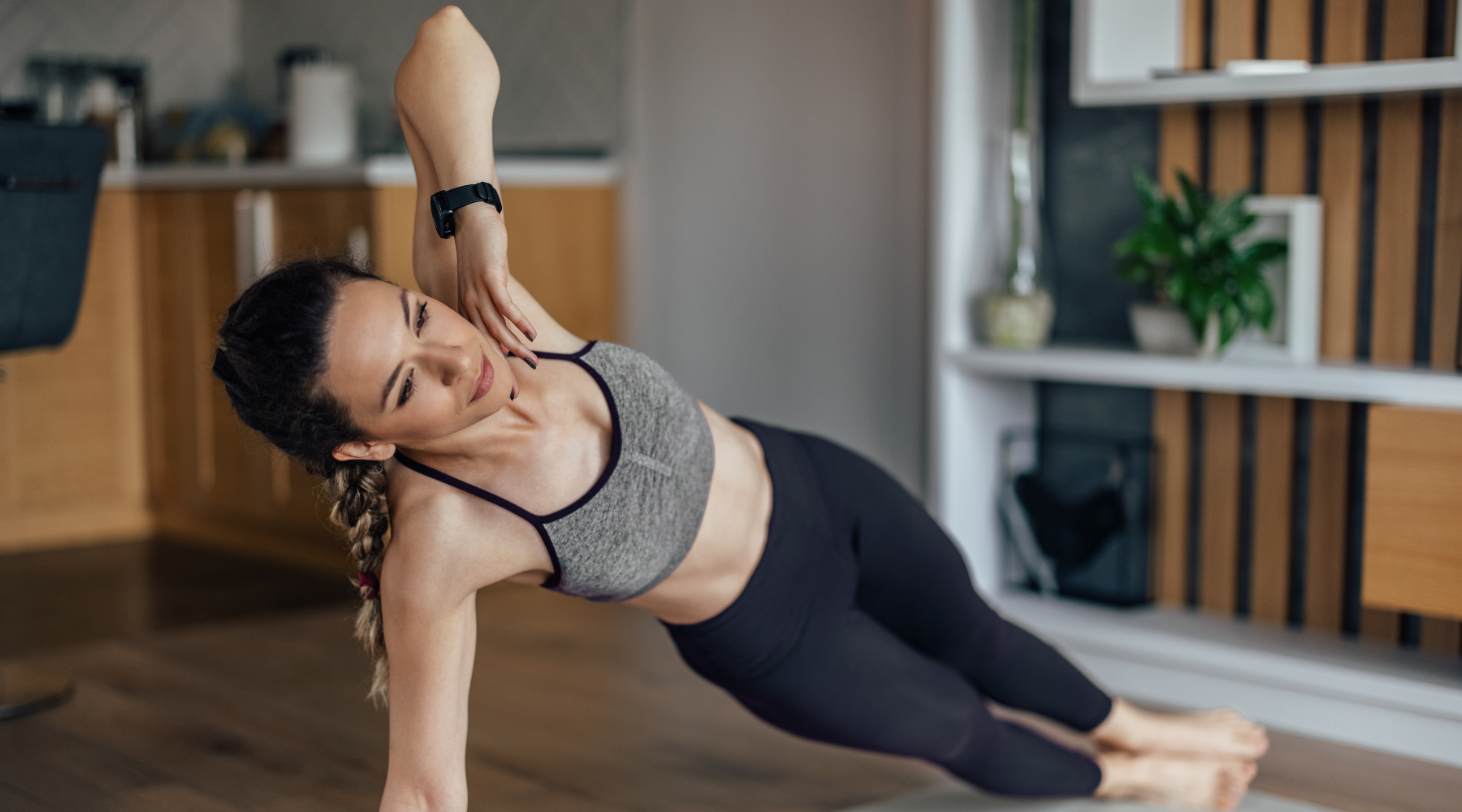
From planks to side planks (30-50 seconds per side)
Dead Bugs – 3 sets or AMRAP
Bird Dogs – 3 sets or timed
A recent study shows: Bodyweight training is just as effective for building muscle as traditional weight training. The difference? You only need your body and some creativity with progressions.
Don't know all the exercises? Check the Bodyweight Library.
Phase 3: Advanced Exercises
You're ready for the next level and more challenging exercises.
Now comes:
Full Push-Ups – From your feet, not your knees
Negative Pull-Ups – Jump up and lower slowly (5-7 seconds)
Pistol Squat Progressions – Single-leg squats with support
L-Sit Holds – On parallettes or on the floor (10-15 seconds)
The Most Common Beginner Mistakes
I see these mistakes again and again:
1. Too Much, Too Soon
The classic. You're motivated, want everything at once, and do a hard workout every day. The result? Overtraining, pain, frustration. Your body needs rest to grow. Three to four training sessions per week are ideal for beginners.
2. Technique is Ignored
A clean wall push-up is more valuable than ten poor regular push-ups. Quality over quantity. Always. Film yourself or train in front of a mirror. Get feedback.
3. Pull Training is Neglected
Push exercises are easier to learn. That's why many only do push-ups and dips. But: Without pull exercises, you develop muscular imbalances. Shoulder problems are inevitable. For every push exercise, you should do a pull exercise.
4. Recovery is Underestimated
Training is just the stimulus. Growth happens during rest. Sleep at least 7-8 hours. Pay attention to balanced nutrition with enough protein and carbohydrates. Drink enough water. Incorporate active recovery through mobility exercises or a walk. This sounds banal, but it makes the difference.
A Possible Training Plan
Here's a possible training plan following the phases above, which you can do for four, eight, or twelve weeks. Three training days per week, about 20-30 minutes per session. Don't just use fixed rep counts – also vary with time-based sets and AMRAP.
Monday – Push & Core:
Warm-Up: 3 minutes arm circles, shoulder rolls
Wall or incline push-ups: 3x10-12 or AMRAP
Pike push-ups: 3x8 (preparation for handstands)
Chair dips: 3x8-10 or timed (30-40s)
Plank: 3x30-45 seconds
Side planks: 3x20-30 seconds per side
Cool-Down: 3 minutes stretching
Wednesday – Pull & Legs:
Warm-Up: 3 minutes leg swings, hip circles
Australian pull-ups: 3x8-10 or AMRAP
Scapular pulls: 3x12
Bodyweight squats: 3x15 or timed (45s)
Lunges: 3x10 per leg
Single leg deadlifts: 3x8 per leg (with chair)
Cool-Down: 3 minutes stretching
Friday – Full Body & Skill Work:
Warm-Up: 3 minutes dynamic stretching
Push-ups (your current level): 3x max or AMRAP
Dead hangs: 3x15-20 seconds
Bulgarian split squats: 3x10 per leg or timed
Dead bugs: 3x12 per side or AMRAP
Hollow body holds: 3x20 seconds
Handstand preparation (wall walks): 3x5
Cool-Down: 3 minutes stretching
Progression: Every 2-3 weeks, you either increase reps, hold times, or move to the next harder level of the exercise.
Why Calisthenics Works
Let me be honest: Calisthenics isn't the only training method that works. Weights have their place. Machines too. But calisthenics has unique advantages that are worth gold, especially for beginners and people over 50.
Functionality: You train movements, not muscles. Every exercise involves multiple muscle groups simultaneously. This is not only more efficient but also more relevant to daily life. A push-up trains chest, shoulders, triceps, core, and even legs. A chest press in the gym? Just chest.
Joint Health: Bodyweight training is self-regulating. You can never use more weight than your body can carry. This protects the joints. Of course, you can still get injured – with poor technique or overload. But the risk is significantly lower than training with heavy weights.
Cost Efficiency: Zero investment. No gym membership. No expensive equipment. A pull-up bar for 30 francs and a few square meters of space – that's all you need. For most people, this is a huge advantage.
The Mental Component
What fascinates me about calisthenics is the mental side. Every exercise is a clear goal. Either you can do a pull-up or you can't. Either you hold the plank for 60 seconds or you don't. This clarity is incredibly motivating.
I see it again and again: people who achieve their first real push-up. Their first pull-up. The first 10 seconds in a handstand. These moments are worth gold. They show you: Your body is capable of more than you think.
And the beautiful thing: it never stops. After the first pull-up comes the first muscle-up. After the first planche lean, the first planche. There's always a next goal, a new challenge.
Frequently Asked Questions
Am I too old for calisthenics?
No. I've trained 65-year-olds who achieved their first pull-up. Age is just a number. What counts is the right progression and patience.
Can I build muscle with calisthenics?
Absolutely. Studies show that bodyweight training is just as effective for hypertrophy (muscle growth) as traditional weight training. The key is progressive overload – you need to make the exercises harder when they become too easy.
How often should I train?
As a beginner: 3-4 times per week. Advanced trainees can also train 5-6 times if they manage intensity well. But: More isn't always better. Your body needs recovery.
Do I really need no equipment?
For the start: no. You can get very far with pure bodyweight. But: A pull-up bar is worth gold. Pull exercises are essential, and without equipment, they're hard to execute cleanly. A bar for 30 francs is a worthwhile investment.
Your Next Steps
You now have everything you need to get started. You know the theory. You have the 12-week plan. Now it's up to you.
My advice: Start small. Not next week. Not tomorrow. Today. Do 10 squats right now. Right now. Immediately. No excuses. That's your first step.
Then follow the plan. Be consistent. Not perfect – consistent. Three training sessions per week. For 12 weeks. That's all I ask of you.
After these 12 weeks, you'll be amazed at what's inside you. At your discipline. Your willpower. Your strength.
Discover Over 1,900 Calisthenics Exercises
In my Bodyweight Library, you'll find over 1,900 exercises – sorted by difficulty level, muscle groups, and movement patterns. Each exercise with video, detailed instructions, and progressions. From absolute beginner exercises to advanced skills.
The database is constantly growing and offers you endless variations for your training. Whether you're just starting or already advanced – you'll always find the right exercise for your current level.
Sources
American College of Sports Medicine (ACSM). (2026). ACSM's Fitness Trends for 2026. Health & Fitness Journal.
Kotarsky, C. J., et al. (2024). Effect of Progressive Calisthenic Push-up Training on Muscle Strength and Thickness. Journal of Strength and Conditioning Research.
Kikuchi, N., & Nakazato, K. (2017). Low-load bench press and push-up induce similar muscle hypertrophy and strength gain. Journal of Exercise Science & Fitness, 15(1), 37-42.
Life Time Survey (2025). Fitness Priorities and Trends Report.
TikTok. (2024). Community Trend of the Year: Calisthenics.
Note: This article does not replace medical advice. Always consult a doctor before starting a new training program if you have health concerns or existing complaints.